'%3e%3cpath%20id='Path_84134'%20data-name='Path%2084134'%20d='M463.506,45.319c.05.9.033,1.834,0,2.733-1.366,37.226-54.177,81.06-91.112,74.809-10.2-1.727-25.263-14.509-28.533-24.267-15.13,5.322-37.38,18.858-48.975,1.253-12.431,4.049-23.175,12.207-36.808,6.808-20.683-8.185-3.374-45.768-11.014-51.912-2.3-1.854-8.933-1.069-10.547,1.039-2.242,2.926-6.341,21.882-8.85,27.765-3.571,8.359-13.353,25.463-23.472,25.891-15.541.655-21.848-26.856-28.537-27-5.432-.117-17.813,29.362-23.435,28.376L134.186,80.861c-2.953.01-18.631,26.612-25.052,28.436C98.42,112.344,96,96.145,90.188,90.426c-32.439,42.695-68.161,11.245-52.994-34.914,7.583-23.078,26.539-38.048,51.5-34.664,21.407,2.9,22.66,29.515,1.617,27.1-8.853-1.016-12.491-7.517-21.5.728-5.876,5.379-18.314,32.552-6.047,33.594,12.11-1.8,18.073-30.407,32.215-23.94,4.3,1.968,10.122,15.528,14.97,12.755,3.869-5.435,22.009-30.661,27.037-31.249,8.141-.949,14.342,17.956,19.223,23.242,4.149.986,15.387-27.538,25.42-22.587,5.051,2.492,17.823,34.667,22.67,33.514l8.9-19.871c-.184-3.531-7.266-5.315-8.913-11.509-4.657-17.522,11-29.482,25.954-20.322,3.384,2.071,5.365,7.109,7.306,7.771,7.914,2.686,26.789-3.448,33.534,3.568,6.688,6.959,1.417,31.867,2.612,42.481.187,1.65.217,4.149,2.232,4.634,1.824.441,12.615-4.6,13.657-6.742,3.832-7.884-3.464-37.219,5.659-43.553,7.163-4.968,17.475-3.885,20.773,4.978,2.84,7.644.334,9.575.311,15.975-.02,4.41-.722,26.435,1.607,27.892,5.245.611,13.54-.668,13.647-7.283.124-7.35-2.218-15.9-1.42-24.631C332.382,22.97,351.861,5.8,376.573,13.519c3.762,1.173,10.764,5.756,13.37,5.746,4.75-.017,18.494-8.389,27.668-9.294,22.346-2.2,44.569,11.405,45.9,35.348m-92.128-5.472c-30.514-.9-8.622,59.9,11.014,56.829,15.3-2.4,49.273-25.279,51.912-41.445,1.416-8.679-1.771-15.464-11.355-15.494-17.118-.05-48.391,37.52-51.571.11'%20transform='translate(78.646%2022.796)'%20fill='%231c63b7'/%3e%3cpath%20id='Path_84135'%20data-name='Path%2084135'%20d='M4.982,97.261c6.2-6.448,22.988-7.908,26.125,2.492,2.432,8.055-2.148,13.4,9.4,16.617,13.3,3.7,45.481-9.528,38.946-23.642C72.111,76.873.709,78.864,3.235,43.041,5.62,9.193,78.194-9.863,104.242,5.241c18.765,10.881,9.01,34.881-7.677,29.485-4.644-1.5-8.93-8.312-14.946-9.742-10.694-2.542-25.767.965-35.4,6.01-8.506,4.453-17.556,11.429-5.529,18.26,17.429,9.9,61.693,13.9,65.5,37.383,7.413,45.741-62.679,68.529-94.677,44.879-10.323-7.63-16.343-24.05-6.528-34.256'%20transform='translate(-0.001%200.002)'%20fill='%231c63b7'/%3e%3cpath%20id='Path_84136'%20data-name='Path%2084136'%20d='M122.432,4.842C146.756.426,150.8,31.288,128.615,34.3c-20.993,2.85-26.235-25.814-6.184-29.455'%20transform='translate(257.1%2010.325)'%20fill='%231c63b7'/%3e%3c/g%3e%3c/svg%3e)
'%20fill='%231c63b7'/%3e%3c/clipPath%3e%3c/defs%3e%3cg%20id='Group_820'%20data-name='Group%20820'%20transform='translate(0%200)'%3e%3cg%20id='Group_819'%20data-name='Group%20819'%20clip-path='url(%23clip-path)'%3e%3cpath%20id='Path_28'%20data-name='Path%2028'%20d='M162.285,20.389c.015.268.01.549,0,.818-.409,11.143-16.217,24.264-27.273,22.393-3.053-.517-7.562-4.343-8.541-7.264-4.529,1.593-11.189,5.645-14.66.375-3.721,1.212-6.937,3.654-11.018,2.038-6.191-2.45-1.01-13.7-3.3-15.539a3.018,3.018,0,0,0-3.157.311c-.671.876-1.9,6.55-2.649,8.311-1.069,2.5-4,7.622-7.026,7.75-4.652.2-6.54-8.039-8.542-8.081-1.626-.035-5.332,8.789-7.015,8.494l-5.4-8.967c-.884,0-5.577,7.966-7.5,8.512-3.207.912-3.93-3.937-5.671-5.649-9.71,12.78-20.4,3.366-15.863-10.451,2.27-6.908,7.944-11.389,15.415-10.376,6.408.869,6.783,8.835.484,8.111-2.65-.3-3.739-2.25-6.436.218-1.759,1.61-5.482,9.744-1.81,10.056,3.625-.539,5.41-9.1,9.643-7.166,1.286.589,3.03,4.648,4.481,3.818,1.158-1.627,6.588-9.178,8.093-9.354,2.437-.284,4.293,5.375,5.754,6.957,1.242.3,4.606-8.243,7.609-6.761,1.512.746,5.335,10.377,6.786,10.032l2.663-5.948c-.055-1.057-2.175-1.591-2.668-3.445-1.394-5.245,3.292-8.825,7.769-6.083,1.013.62,1.606,2.128,2.187,2.326,2.369.8,8.019-1.032,10.038,1.068,2,2.083.424,9.539.782,12.716.056.494.065,1.242.668,1.387.546.132,3.776-1.376,4.088-2.018,1.147-2.36-1.037-11.141,1.694-13.037,2.144-1.487,5.231-1.163,6.218,1.49.85,2.288.1,2.866.093,4.782-.006,1.32-.216,7.913.481,8.349,1.57.183,4.053-.2,4.085-2.18.037-2.2-.664-4.76-.425-7.373.668-7.31,6.5-12.45,13.9-10.139,1.126.351,3.222,1.723,4,1.72,1.422-.005,5.536-2.511,8.282-2.782,6.689-.66,13.341,3.414,13.738,10.581m-27.577-1.638c-9.134-.27-2.581,17.931,3.3,17.011,4.581-.717,14.749-7.567,15.539-12.406.424-2.6-.53-4.629-3.4-4.638-5.124-.015-14.485,11.231-15.437.033'%20fill='%231c63b7'/%3e%3cpath%20id='Path_29'%20data-name='Path%2029'%20d='M1.491,29.114c1.856-1.93,6.881-2.367,7.82.746.728,2.411-.643,4.012,2.813,4.974,3.982,1.109,13.614-2.852,11.658-7.077C21.585,23.011.212,23.607.968,12.884,1.682,2.752,23.406-2.952,31.2,1.569c5.617,3.257,2.7,10.441-2.3,8.826-1.39-.45-2.673-2.488-4.474-2.916-3.2-.761-7.713.289-10.6,1.8-2.546,1.333-5.255,3.421-1.655,5.466,5.217,2.964,18.467,4.162,19.606,11.19C34,39.626,13.023,46.447,3.445,39.368c-3.09-2.284-4.892-7.2-1.954-10.254'%20fill='%231c63b7'/%3e%3cpath%20id='Path_30'%20data-name='Path%2030'%20d='M113.607,4.54c7.281-1.322,8.492,7.916,1.851,8.817-6.284.853-7.853-7.727-1.851-8.817'%20fill='%231c63b7'/%3e%3c/g%3e%3c/g%3e%3c/svg%3e)
Sanrio Today and Tomorrow from an Investor’s Perspective: Roundtable Discussion with an Analyst:
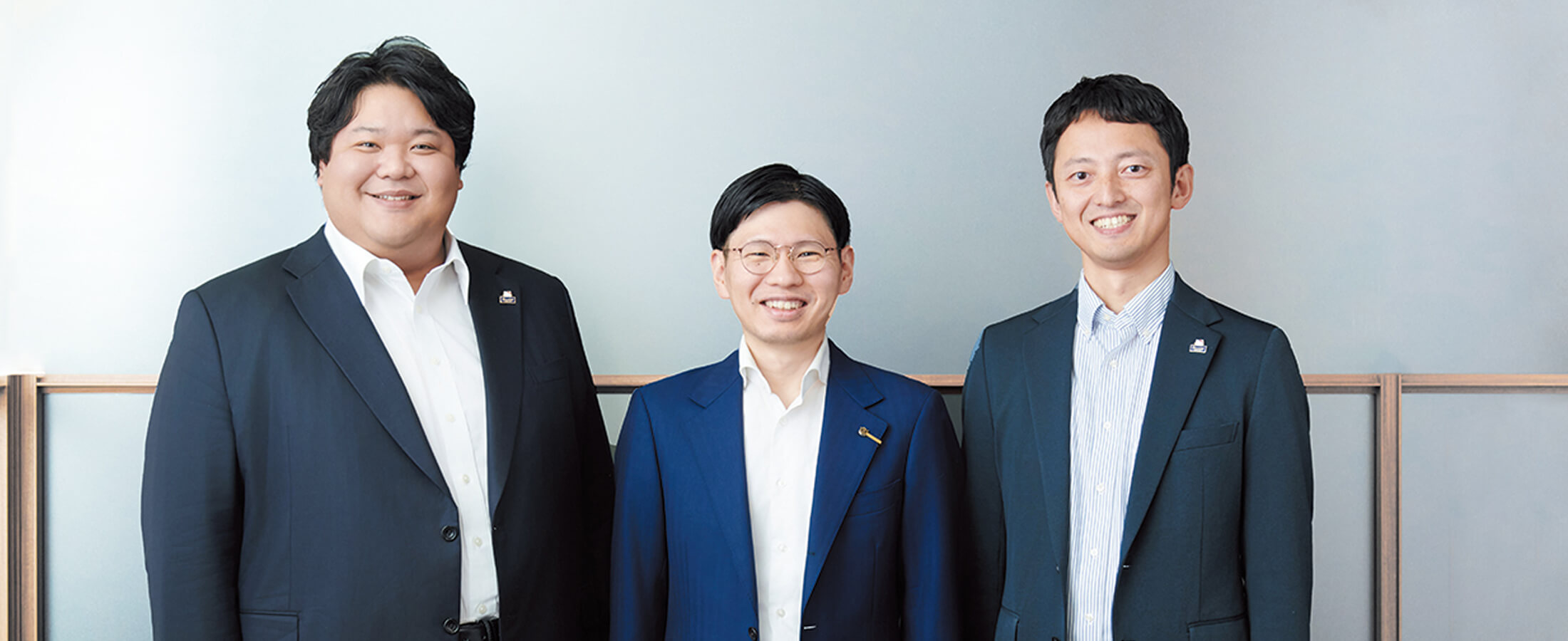
President and CEO
Tomokuni Tsuji
Senior Analyst, Equity Research
Department, Daiwa Securities Co. Ltd.
Satoru Sekine
Managing Executive Officer
Executive Manager, Corporate
Management Division
Seiichiro Matsumoto
In recent years, Sanrio has raised its profile in global markets, and the capital markets’ assessment of the company has changed significantly. Behind this shift lies not only the evolution of Sanrio’s IP business but also a management transformation toward viewing corporate value through a long-term lens. At the same time, the company’s rapid growth is raising new challenges for its organization and governance. To sustainably enhance its corporate value, what should Sanrio leverage as its strengths, and what should it change? President and CEO Tomokuni Tsuji was joined by Seiichiro Matsumoto, the Managing Executive Officer responsible for finance, in a conversation with Satoru Sekine of Daiwa Securities, an analyst who has analyzed Sanrio within the leisure and amusement industry. Together, they exchanged views on growth strategy and the future direction of the company’s disclosures.
The “changes” and “challenges” the market has sensed amid rapid growth
Matsumoto:Mr. Sekine, you cover Sanrio within the leisure and amusement industry and analyze the company’s strengths and challenges from a capital markets perspective. From an investor’s point of view, how do you view the changes Sanrio has undergone in recent years?
Sekine:When I initiated coverage in 2022, the reforms under the new management structure were already well advanced. What struck me most was a conversation with foreign investors during a visit to North America around 2023. Conversations naturally turned to topics such as “I hear Sanrio is releasing a game” and “something interesting seems to be starting on Roblox and Apple Arcade.” The buzz in the American market undoubtedly drove a dramatic shift in how investors assessed the company.
Matsumoto:The North American gaming project was launched primarily by Sanrio, Inc., our local subsidiary there, correct?
Tsuji:That was how it started, but ultimately the Head Office took the initiative, and proactively drove the effort as part of our digital strategy, while also considering its role in branding. Our goal was to expand touchpoints with customers around the world through our IP, and our digital initiatives were one way of achieving this. Making games is not the goal in itself. Rather, the goal was to create new opportunities for people to discover our IP and expand their points of contact with the brand. We are pleased that those efforts have been recognized.
Sekine:On the other hand, at that time, I believe persistent concerns remained in the market about whether Sanrio’s growth could truly continue, centered on weaknesses in its defensive capabilities. Sanrio also experienced a sharp reversal following its rapid growth in the 2010s. I used the phrase “growing pains” even at the time, and I view the misconduct incident in North America as a problem that falls within that same pattern. I believe the key determinant of corporate value is whether you can raise your defensive capabilities to the same level as your offensive strengths.
Tsuji:When investors have asked me in our dialogues what the risks ahead are, I have pointed to human resources and management base. We have not, of course, been standing still. But our business is expanding faster than anticipated, and we need to take Sanrio’s organizational structure to the next stage. As the scale of the company changes, so do the perspectives required of our executives. I have come to recognize, more strongly than ever, that the management approach required today—myself included—is different from what it was 10 years ago.
Sekine:Beyond that, now that the overseas business has grown to this scale, I also hope that management will spend more of its time overseas. The on-the-ground atmosphere and direct dialogue with investors are things you simply cannot gain by staying in Japan. Sanrio is a company that will continue to grow internationally, and that is precisely why the value of visiting those markets in person will only increase.
Matsumoto:Indeed, when we look at how our top management actually allocates its time, a large share ends up being spent in Japan. In addition, while we have historically delegated considerable authority to local companies in our overseas business, visiting those markets in person is important for advancing both governance and business strategies.
Tsuji:My job as a leader is to consciously make time to see overseas markets firsthand, engage with customers and partners, and think through our future strategy. We are also streamlining our domestic operations to make that time available.
Matsumoto:At the same time, the Board of Directors has also reflected on the fact that the recent developments do not negate the management reforms and governance-related initiatives we have undertaken to date. We should improve what needs improving, and continue what deserves to continue. It is important to view our track record calmly and objectively for what it is.
Sekine:I believe Sanrio has consistently faced issues head-on and evolved its governance in response. Such challenges tend to be a never-ending battle. While Sanrio is a long-established company, it remains young in the sense that it continues to embrace change. That is precisely why I hope it will keep rising to those challenges.
Sanrio’s strength lies not only in creating value but also in accumulating value
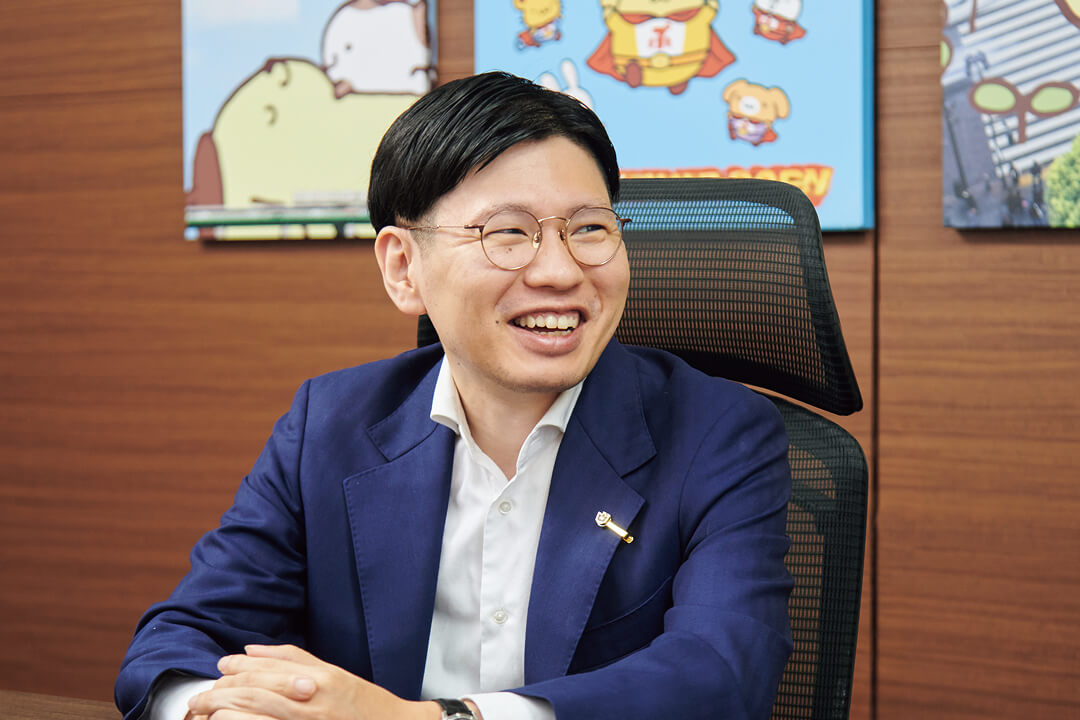
Matsumoto:Mr. Sekine, how do you see Sanrio’s strengths and competitive advantages in the market?
Sekine:Investors sometimes ask me the same question, but my answer is not the IP itself. Of course, powerful characters such as Hello Kitty are a major asset. However, I believe the company’s true strength lies in having a system that can continuously nurture the value of that IP.
Tsuji:As you say, the foundation of Sanrio’s business is a cycle of creating, accumulating, and expanding value. It is not simply a matter of creating IP value. We build brand affinity across diverse channels, and that value is ultimately consumed in various forms—through products, services, licensing, and more. We take pride in the fact that very few companies worldwide can drive this cycle on their own. Creating a character is not the goal. The goal is building an environment in which that character continues to be loved for a long time. To that end, we maintain touchpoints with customers across a wide range of channels, including licensing, product sales, e-commerce, digital, and theme parks. Each of these is a distinct business, but all of them serve as platforms for nurturing IP value.
Sekine:I think that is something you could communicate more clearly to investors. For a game company, for example, creating hit titles is the source of competitive advantage. However, creating and nurturing a single IP requires substantial cost, which tends to push companies toward conservative decisions based on past successes. Sanrio, by contrast, already has a system in place that deploys a single IP across multiple channels, with each customer experience enhancing the brand’s value. This is a unique strength that no other Japanese company possesses. It is precisely because this foundation exists that the company can boldly pursue new challenges. This novelty also aligns with current demand in the content market.
“Backcasting” from Our Long-Term Vision
Tsuji:The Medium-Term Management Plan (FY3/2025–FY3/2027) sets out to break free from volatility and prioritizes sustained growth. Internally, we have developed strategic plans linking character portfolio growth to initiatives, but we have not yet communicated these fully to external audiences. That gap is a challenge we need to address.
Matsumoto:As you noted in a previous report, Mr. Sekine, from a financial perspective, a company with this level of ROE would ordinarily command a much higher PBR. The fact that it does not, in our view, reflects the market’s lack of conviction about the company’s future prospects. If the root cause is insufficient conviction in the company’s stated growth strategy and outlook, that is something we need to address.
Sekine:I share the same view. For example, in the North American market, which is currently growing, investors still lack a clear picture of what events are planned and how those events will translate into IP growth and revenue. In the domestic market, the growth model and strategy appear reasonably well established. The key question is whether the company can articulate a continuous narrative for North America.
Matsumoto:Beyond conviction in any single year, we believe a longer-term perspective also needs to be communicated. Describing our 10-year Long-Term Vision as a “lighthouse” reflects exactly that intent.
Tsuji:The 10-year Long-Term Vision is a message to our employees as much as it is a message to our investors. I often use the word “backcasting.” If we want to achieve a 10% market share in North America in 10 years, we need to understand what position each character will hold at that point and which categories will be driving that support. Backcasting from that point makes clear which IPs to invest in this year, which licenses to pursue, and which markets to take on. The 10-year Long-Term Vision exists not merely to describe the future, but to steer the decisions we make today.
Matsumoto:At our management retreat, we gave not only the Head Office but also our overseas Group companies time to develop their own 10-year stories. These efforts are strengthening Sanrio’s ability to envision its future.
Sekine:If investors understand this, they will be more willing to accept investments whose results are hard to see in the short term. What I value most about the 10-year Long-Term Vision is that it places a 10-year time horizon at the center of the company’s management. In the content business, accurately predicting even three years ahead is no easy task. That is precisely why, rather than building up from this year or next year, it was so meaningful to define first where the company wants to be in 10 years. That approach gave rise to a way of thinking: working back from where the company wants to be in 10 years to determine what it should do this year. That, I believe, is an effort to change the very way the company thinks about management.
Tsuji:In that sense, the launch of Puroland operations in 1990 was a major lesson for us. At the time, the objective was simply to increase visitor numbers, and we lacked the perspective to connect that goal to Sanrio’s overall profitability.
Sekine:Looking solely at earnings, some may well take a short-term view. However, Puroland is not merely a theme park. It is a place where fans encounter the characters, return again and again, and deepen their attachment to the brand. The “oshikatsu” (supporting a favorite character) concept of fandom activities that Sanrio embraced in the 2010s was an excellent initiative in that it clarified that direction. That customer experience leads to further consumption and word-of-mouth, which in turn enhances the value of Sanrio’s IP. I see Puroland as precisely a place where value accumulates.
Matsumoto:I also believe I must communicate that thinking more thoroughly. Theme parks and digital investments do not all translate into profits immediately. In the long run, however, these are essential investments for nurturing the value of our IP and enhancing corporate value. That is precisely why we have set a 10-year Long-Term Vision and manage the business by backcasting from it.
Tsuji:From that perspective, the initiative we currently regard as most important is Virtual Sanrio Puroland. As virtual-world interaction grows more active, Virtual Sanrio Puroland should serve as a hub at the center of it. Expansion into games and video content is also a prospect we can look forward to. It is precisely because we take a long-term view that we can identify which areas deserve investment.
Sekine:What you have described conveys an evolution from patchwork management to vision-driven management. Having a vision should make it far clearer whether to press ahead with a business or withdraw from it. If the company can communicate President Tsuji’s intentions and vision to investors with greater clarity and in more concrete terms, trust in Sanrio should grow even further.
Deepening dialogue with the market, anchored by a management policy conscious of the stock price
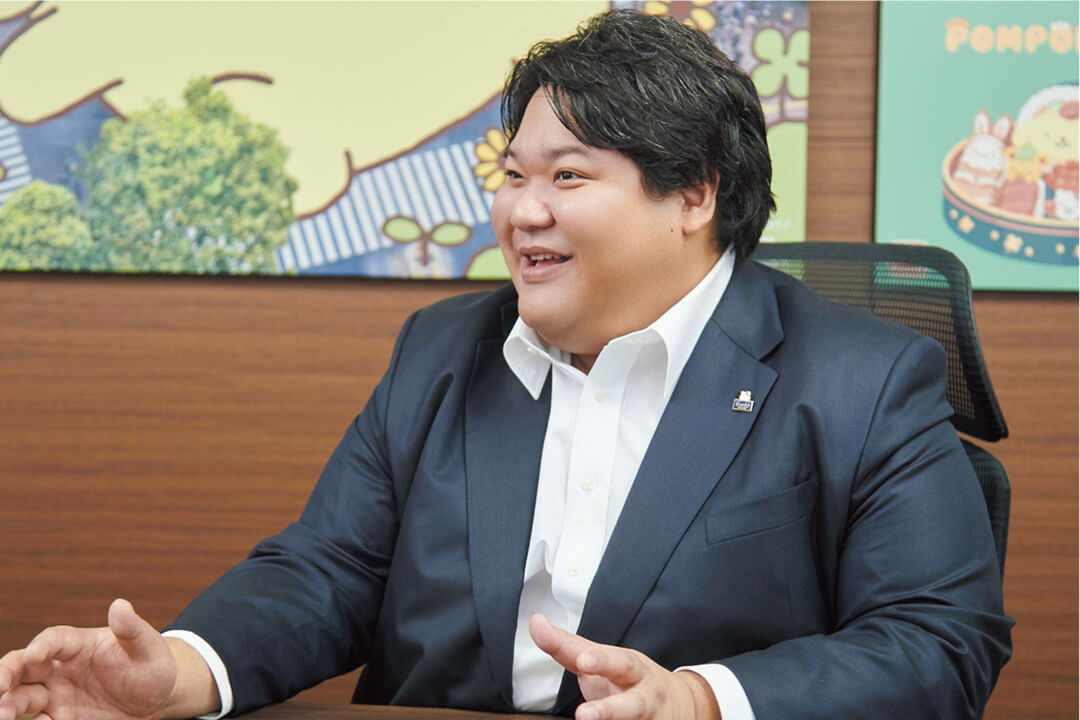
Matsumoto:The 10-year Long-Term Vision also includes a deliberate commitment to setting a concrete stock price target: a market capitalization of 5 trillion yen. By stating Sanrio’s commitment to enhancing corporate value directly to the market, we wanted investors to feel the change in management in numerical terms as well.
Tsuji:I check the stock price every day. Of course, this is not to rejoice or despair over a single day’s fluctuations. The stock price, as I see it, is a mirror reflecting how the market assesses our future. That is precisely why we place great importance on dialogue with investors. A management team that looks only inward cannot truly enhance corporate value. What expectations does the market hold for us, and what challenges does it identify? Understanding that is, in our view, an essential part of management’s role.
Sekine:Deepening dialogue with investors also requires communication in informal settings. Formal presentations with thorough preparation are important, but I also believe it is effective to hold regular meetings—monthly, for example, even online.
Tsuji:That is certainly a good idea. Drawing on my own experience, I have repeatedly presented our 10-year Long-Term Vision at general meetings of shareholders and conferences. This way, I am refining, day by day, how I understand the vision itself, its details, and how I communicate it. Our 10-year Long-Term Vision is not something we impose on the market unilaterally. It is something we evolve by incorporating feedback and assessments from our stakeholders. For that reason as well, we intend to continue valuing regular opportunities for communication.
Evolving further alongside our Long-Term Vision, while preserving what makes Sanrio unique
Sekine:Sanrio now occupies a truly unique position in the world, I believe. It is not merely a matter of having strong IP. Sanrio has a system for nurturing and building on that value, and connecting it to the next stage of growth. That is precisely why, if Sanrio can further sharpen both its offensive and defensive capabilities, corporate value will advance to an even higher level. That is my expectation.
Matsumoto:Thank you. Sustaining growth requires a sense of balance—between investment and foundation strengthening, and between the short term and the long term. Through dialogue with investors and shareholders, I aim to support Sanrio’s evolution from the financial side in a way that brings genuine conviction.
Tsuji:With the backcasting mindset I described earlier as our guide, I intend to continue engaging in thorough explanation and dialogue. Sanrio’s founding principle is “Minna Nakayoku” (Getting Along Together). Sanrio will remain a company that grows together with all its stakeholders, including its shareholders and the customers who love Sanrio’s characters. We hope you will look forward to Sanrio’s continued evolution.