'%3e%3cpath%20id='Path_84134'%20data-name='Path%2084134'%20d='M463.506,45.319c.05.9.033,1.834,0,2.733-1.366,37.226-54.177,81.06-91.112,74.809-10.2-1.727-25.263-14.509-28.533-24.267-15.13,5.322-37.38,18.858-48.975,1.253-12.431,4.049-23.175,12.207-36.808,6.808-20.683-8.185-3.374-45.768-11.014-51.912-2.3-1.854-8.933-1.069-10.547,1.039-2.242,2.926-6.341,21.882-8.85,27.765-3.571,8.359-13.353,25.463-23.472,25.891-15.541.655-21.848-26.856-28.537-27-5.432-.117-17.813,29.362-23.435,28.376L134.186,80.861c-2.953.01-18.631,26.612-25.052,28.436C98.42,112.344,96,96.145,90.188,90.426c-32.439,42.695-68.161,11.245-52.994-34.914,7.583-23.078,26.539-38.048,51.5-34.664,21.407,2.9,22.66,29.515,1.617,27.1-8.853-1.016-12.491-7.517-21.5.728-5.876,5.379-18.314,32.552-6.047,33.594,12.11-1.8,18.073-30.407,32.215-23.94,4.3,1.968,10.122,15.528,14.97,12.755,3.869-5.435,22.009-30.661,27.037-31.249,8.141-.949,14.342,17.956,19.223,23.242,4.149.986,15.387-27.538,25.42-22.587,5.051,2.492,17.823,34.667,22.67,33.514l8.9-19.871c-.184-3.531-7.266-5.315-8.913-11.509-4.657-17.522,11-29.482,25.954-20.322,3.384,2.071,5.365,7.109,7.306,7.771,7.914,2.686,26.789-3.448,33.534,3.568,6.688,6.959,1.417,31.867,2.612,42.481.187,1.65.217,4.149,2.232,4.634,1.824.441,12.615-4.6,13.657-6.742,3.832-7.884-3.464-37.219,5.659-43.553,7.163-4.968,17.475-3.885,20.773,4.978,2.84,7.644.334,9.575.311,15.975-.02,4.41-.722,26.435,1.607,27.892,5.245.611,13.54-.668,13.647-7.283.124-7.35-2.218-15.9-1.42-24.631C332.382,22.97,351.861,5.8,376.573,13.519c3.762,1.173,10.764,5.756,13.37,5.746,4.75-.017,18.494-8.389,27.668-9.294,22.346-2.2,44.569,11.405,45.9,35.348m-92.128-5.472c-30.514-.9-8.622,59.9,11.014,56.829,15.3-2.4,49.273-25.279,51.912-41.445,1.416-8.679-1.771-15.464-11.355-15.494-17.118-.05-48.391,37.52-51.571.11'%20transform='translate(78.646%2022.796)'%20fill='%231c63b7'/%3e%3cpath%20id='Path_84135'%20data-name='Path%2084135'%20d='M4.982,97.261c6.2-6.448,22.988-7.908,26.125,2.492,2.432,8.055-2.148,13.4,9.4,16.617,13.3,3.7,45.481-9.528,38.946-23.642C72.111,76.873.709,78.864,3.235,43.041,5.62,9.193,78.194-9.863,104.242,5.241c18.765,10.881,9.01,34.881-7.677,29.485-4.644-1.5-8.93-8.312-14.946-9.742-10.694-2.542-25.767.965-35.4,6.01-8.506,4.453-17.556,11.429-5.529,18.26,17.429,9.9,61.693,13.9,65.5,37.383,7.413,45.741-62.679,68.529-94.677,44.879-10.323-7.63-16.343-24.05-6.528-34.256'%20transform='translate(-0.001%200.002)'%20fill='%231c63b7'/%3e%3cpath%20id='Path_84136'%20data-name='Path%2084136'%20d='M122.432,4.842C146.756.426,150.8,31.288,128.615,34.3c-20.993,2.85-26.235-25.814-6.184-29.455'%20transform='translate(257.1%2010.325)'%20fill='%231c63b7'/%3e%3c/g%3e%3c/svg%3e)
'%20fill='%231c63b7'/%3e%3c/clipPath%3e%3c/defs%3e%3cg%20id='Group_820'%20data-name='Group%20820'%20transform='translate(0%200)'%3e%3cg%20id='Group_819'%20data-name='Group%20819'%20clip-path='url(%23clip-path)'%3e%3cpath%20id='Path_28'%20data-name='Path%2028'%20d='M162.285,20.389c.015.268.01.549,0,.818-.409,11.143-16.217,24.264-27.273,22.393-3.053-.517-7.562-4.343-8.541-7.264-4.529,1.593-11.189,5.645-14.66.375-3.721,1.212-6.937,3.654-11.018,2.038-6.191-2.45-1.01-13.7-3.3-15.539a3.018,3.018,0,0,0-3.157.311c-.671.876-1.9,6.55-2.649,8.311-1.069,2.5-4,7.622-7.026,7.75-4.652.2-6.54-8.039-8.542-8.081-1.626-.035-5.332,8.789-7.015,8.494l-5.4-8.967c-.884,0-5.577,7.966-7.5,8.512-3.207.912-3.93-3.937-5.671-5.649-9.71,12.78-20.4,3.366-15.863-10.451,2.27-6.908,7.944-11.389,15.415-10.376,6.408.869,6.783,8.835.484,8.111-2.65-.3-3.739-2.25-6.436.218-1.759,1.61-5.482,9.744-1.81,10.056,3.625-.539,5.41-9.1,9.643-7.166,1.286.589,3.03,4.648,4.481,3.818,1.158-1.627,6.588-9.178,8.093-9.354,2.437-.284,4.293,5.375,5.754,6.957,1.242.3,4.606-8.243,7.609-6.761,1.512.746,5.335,10.377,6.786,10.032l2.663-5.948c-.055-1.057-2.175-1.591-2.668-3.445-1.394-5.245,3.292-8.825,7.769-6.083,1.013.62,1.606,2.128,2.187,2.326,2.369.8,8.019-1.032,10.038,1.068,2,2.083.424,9.539.782,12.716.056.494.065,1.242.668,1.387.546.132,3.776-1.376,4.088-2.018,1.147-2.36-1.037-11.141,1.694-13.037,2.144-1.487,5.231-1.163,6.218,1.49.85,2.288.1,2.866.093,4.782-.006,1.32-.216,7.913.481,8.349,1.57.183,4.053-.2,4.085-2.18.037-2.2-.664-4.76-.425-7.373.668-7.31,6.5-12.45,13.9-10.139,1.126.351,3.222,1.723,4,1.72,1.422-.005,5.536-2.511,8.282-2.782,6.689-.66,13.341,3.414,13.738,10.581m-27.577-1.638c-9.134-.27-2.581,17.931,3.3,17.011,4.581-.717,14.749-7.567,15.539-12.406.424-2.6-.53-4.629-3.4-4.638-5.124-.015-14.485,11.231-15.437.033'%20fill='%231c63b7'/%3e%3cpath%20id='Path_29'%20data-name='Path%2029'%20d='M1.491,29.114c1.856-1.93,6.881-2.367,7.82.746.728,2.411-.643,4.012,2.813,4.974,3.982,1.109,13.614-2.852,11.658-7.077C21.585,23.011.212,23.607.968,12.884,1.682,2.752,23.406-2.952,31.2,1.569c5.617,3.257,2.7,10.441-2.3,8.826-1.39-.45-2.673-2.488-4.474-2.916-3.2-.761-7.713.289-10.6,1.8-2.546,1.333-5.255,3.421-1.655,5.466,5.217,2.964,18.467,4.162,19.606,11.19C34,39.626,13.023,46.447,3.445,39.368c-3.09-2.284-4.892-7.2-1.954-10.254'%20fill='%231c63b7'/%3e%3cpath%20id='Path_30'%20data-name='Path%2030'%20d='M113.607,4.54c7.281-1.322,8.492,7.916,1.851,8.817-6.284.853-7.853-7.727-1.851-8.817'%20fill='%231c63b7'/%3e%3c/g%3e%3c/g%3e%3c/svg%3e)
Financial Strategy
to Support Our Challenges
Featuring a financial analysis of Sanrio's strategy
for achieving sustainable growth
and enhancing corporate value.

- Sanrio's corporate value and
my priorities as the officer in
charge of finance - Capital allocation for
long-term growth - Short-term performance and
financial discipline - The role of the officer in charge of finance in supporting corporate value enhancement
- Flexible share buybacks and
capital structure - Strengthening governance and global CFO functions
- Dialogue with shareholders and investors
Sanrio's corporate value and my priorities as the officer in charge of finance
I believe that corporate value is not measured solely by single-year performance, but rather by the overall ability to generate cash flow sustainably over the long term.
The source of Sanrio's corporate value lies in our intangible assets such as brand trust, connections with fans, and our business foundation that continuously generates new value. While these assets are not easily visible on our financial statements, they are the most important foundation underpinning our future growth and earning power.
Therefore, as the officer in charge of finance, I prioritize capital allocation and financial strategies that lead to the long-term expansion of our corporate value, rather than simply boosting short-term profit.
Capital allocation for long-term growth
In our Long-Term Vision, we are targeting the creation of 300 billion hours of Sanrio Time annually and market capitalization of 5 trillion yen by FY3/2035. To achieve this, we have set a compound annual growth rate (CAGR) in operating profit of 10% or more over the ten years leading up to FY3/2035. While achieving these targets will not be easy, given our global growth potential, I believe that the most important thing for our company right now is to prioritize allocating capital to areas that will lead to future growth in our corporate value.
Specifically, we are investing in brand marketing, the Harmonyland's entertainment resort development concept, and new businesses, including games. While these measures may have a negative impact on profits in the short term, they are important upfront investments that will increase user engagement and lead to future licensing income and business opportunities. At Sanrio, we make investment decisions based not only on single-year profitability, but also on contributions to brand value, the expansion of touchpoints with fans, and ripple effects on future earnings.
I view this entire process as a value creation cycle, leading from increasing recognition, to fostering attachment, to the accumulation of brand value, to monetization, and to reinvestment. I believe that rapidly and reliably running this cycle is key to enhancing Sanrio's corporate value.
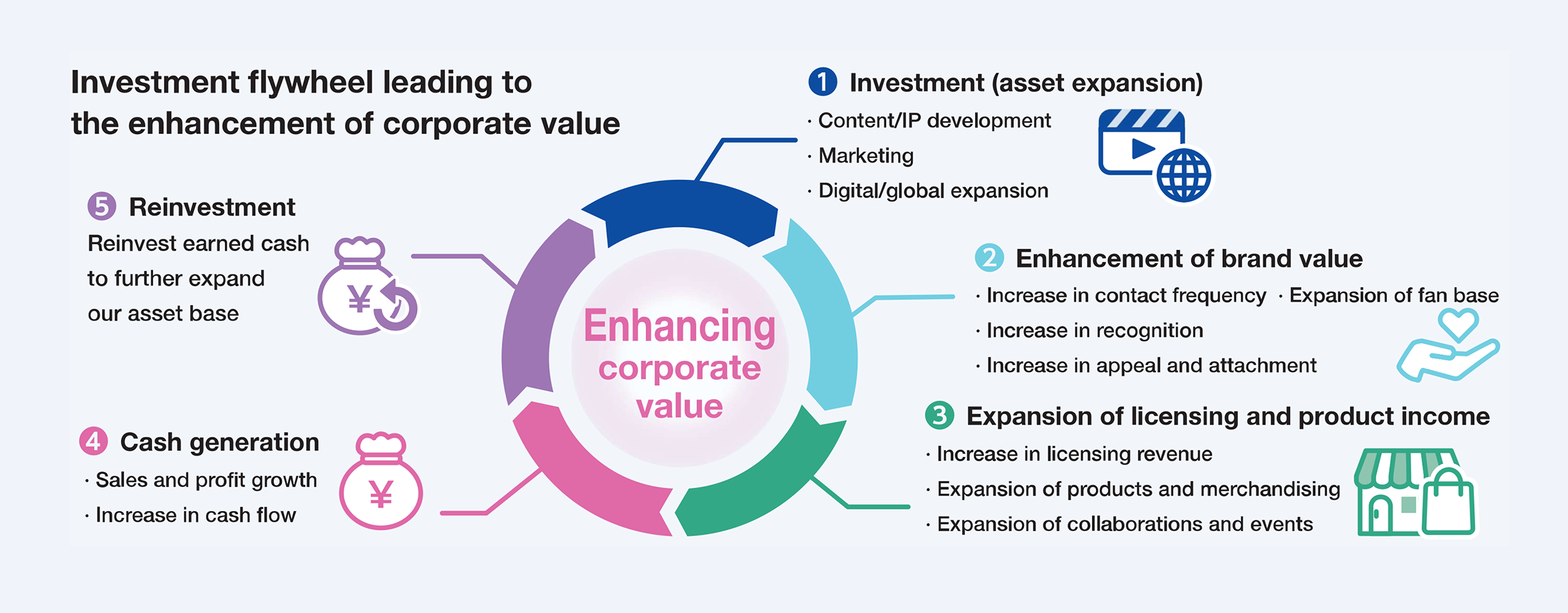
As a prerequisite to this, we believe that the highly profitable licensing business will remain our core source of sales over the long term. We also intend to maintain high levels of profitability and capital efficiency.
During the period of the current Medium-Term Management Plan (up to FY3/2027),we will operate with a focus on financial discipline, aiming for ROE of 30%, and are also considering M&A of 50 billion yen or more as part of our capital allocation policy. On the other hand, we have established rigorous criteria for investment decisions, which we intend to carefully evaluate from the perspectives of capital efficiency and growth potential. In the event that we do not implement any large-scale M&A,we will consider providing up to 30 billion yen in additional shareholder returns.
- Financial discipline*
(Up to FY3/2027) -
- Consider management that significantly exceeds the cost of capital, with a target ROE level of 30%
- Consider organic investments (approx. JPY 30 billion) and M&A and minority investments (JPY 50 billion or more) that support our value creation story over three years, from FY3/2025 to FY3/2027
- The M&A goal is to prioritize consideration of projects where high profitability and capital efficiency can be maintained even after acquisition
- The dividend payout ratio target is 30% or more; however, if no attractive investment opportunities are found, consider additional shareholder returns (up to JPY 30 billion), taking into account surplus funds and financial strength
- Focus on increasing the total shareholder return (TSR) due to higher share price, in addition to dividends
- For large investments such as M&A, rigorous review will be conducted through the Investment Committee, and comprehensive decisions will be made based on both qualitative and quantitative aspects.
Short-term performance and financial discipline
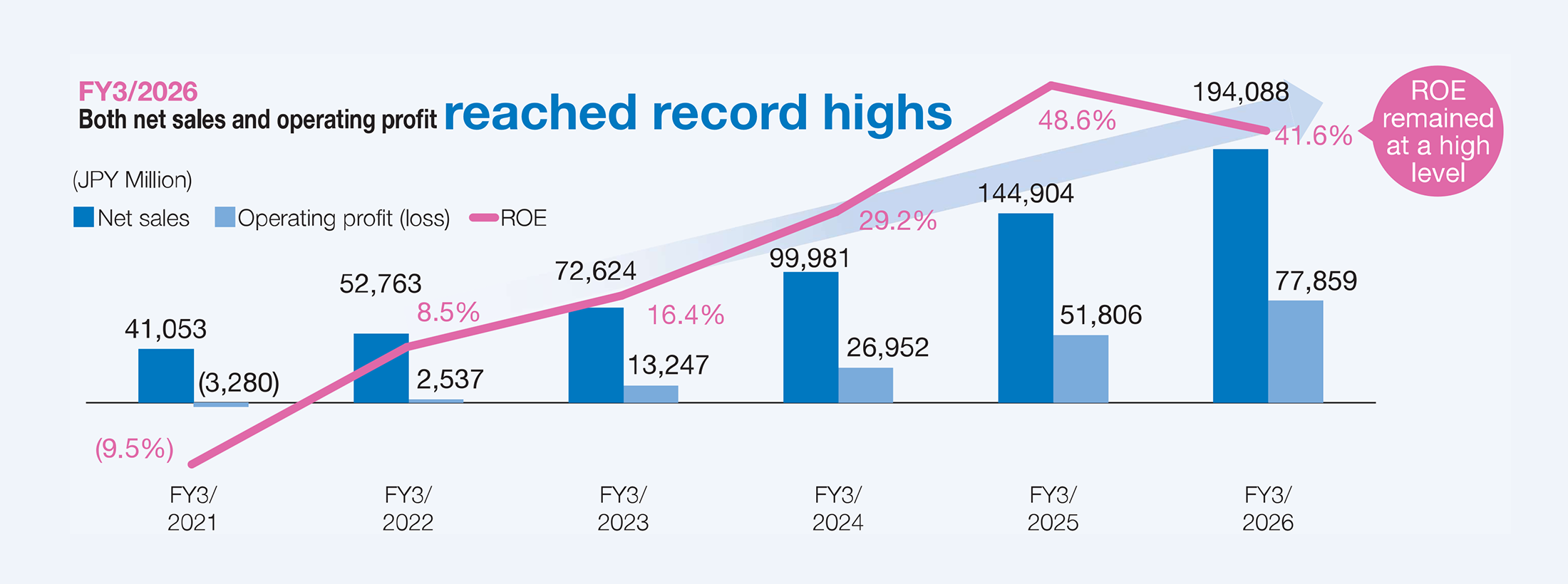
In FY3/2026, the combined effects of the growing popularity of Sanrio characters thanks to various marketing initiatives, the acquisition of licensing deals in Japan and overseas, contributions from large directly managed stores in Japan in the product sales business, and the expansion of franchise stores in mainland China boosted business performance, resulting in net sales of 194 billion yen (up 33.9% year on year) and operating profit of 77.8 billion yen (up 50.3% year on year), marking the fifth consecutive year of sales and profit growth and new record highs. Return on equity (ROE), an indicator of capital efficiency, came to 41.6%, remaining high even among Japanese companies.
By region, growth was driven by the success of licensee promotions and continuous exposure on owned media in Japan, store network expansion in mainland China, and the expansion of fast fashion operations in Europe.
However, our goal is not simply to maximize short-term business performance. We prioritize optimizing short-term performance while carefully assessing whether the initiatives for each region and business contribute to sustainable future growth.
The role of the officer in charge of finance in supporting corporate value enhancement
As the officer in charge of finance, I focus not only on internal business management but also on addressing challenges from both management and market perspectives to enhance corporate value.
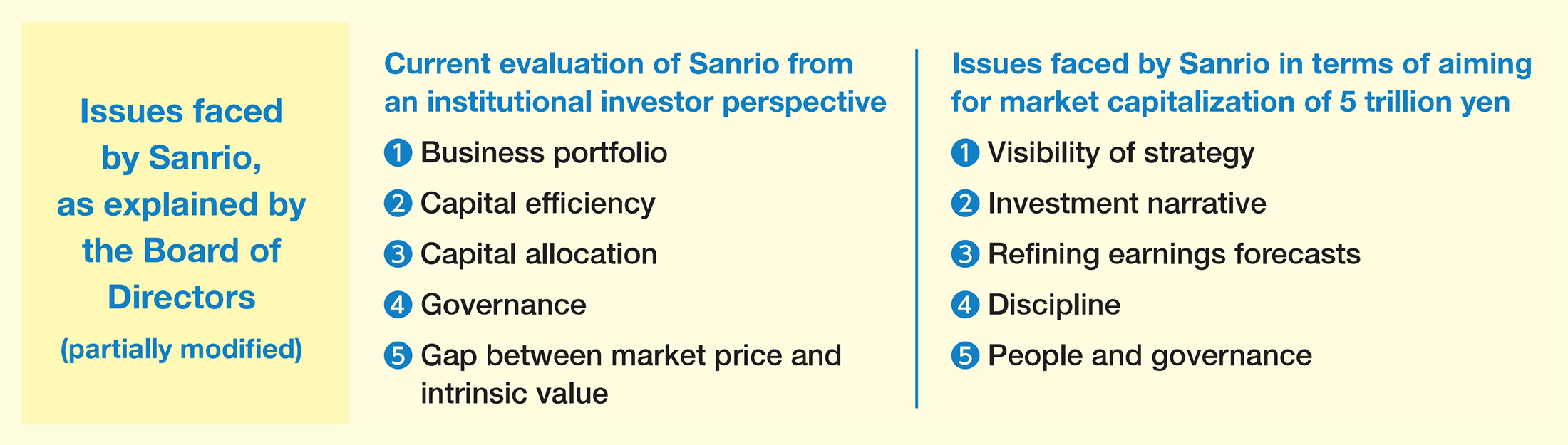
Specifically, I continuously examine our management issues in terms of the business portfolio, capital efficiency, capital allocation, governance, and the gap between market price and intrinsic value.
Our business model involves enhancing the value of our IP in a multifaceted manner by combining various touchpoints such as product sales, theme parks, games, digital, and edutainment, with our licensing business at the core. This is an asset-light and highly profitable business structure, and at the same time, it is excellent for building brand value over the medium to long term.
Furthermore, I believe that maintaining the strength of our capital efficiency, as indicated by our high ROE, while balancing growth investments and disciplined financial management is also an important responsibility of the officer in charge of finance.
Flexible share buybacks and capital structure
Capital allocation is one of the most important themes that impact corporate value. As a basic policy, we prioritize growth investments over shareholder returns.
That said, because our high profitability makes it easy to accumulate cash on hand, we need to continuously consider the optimal capital structure.
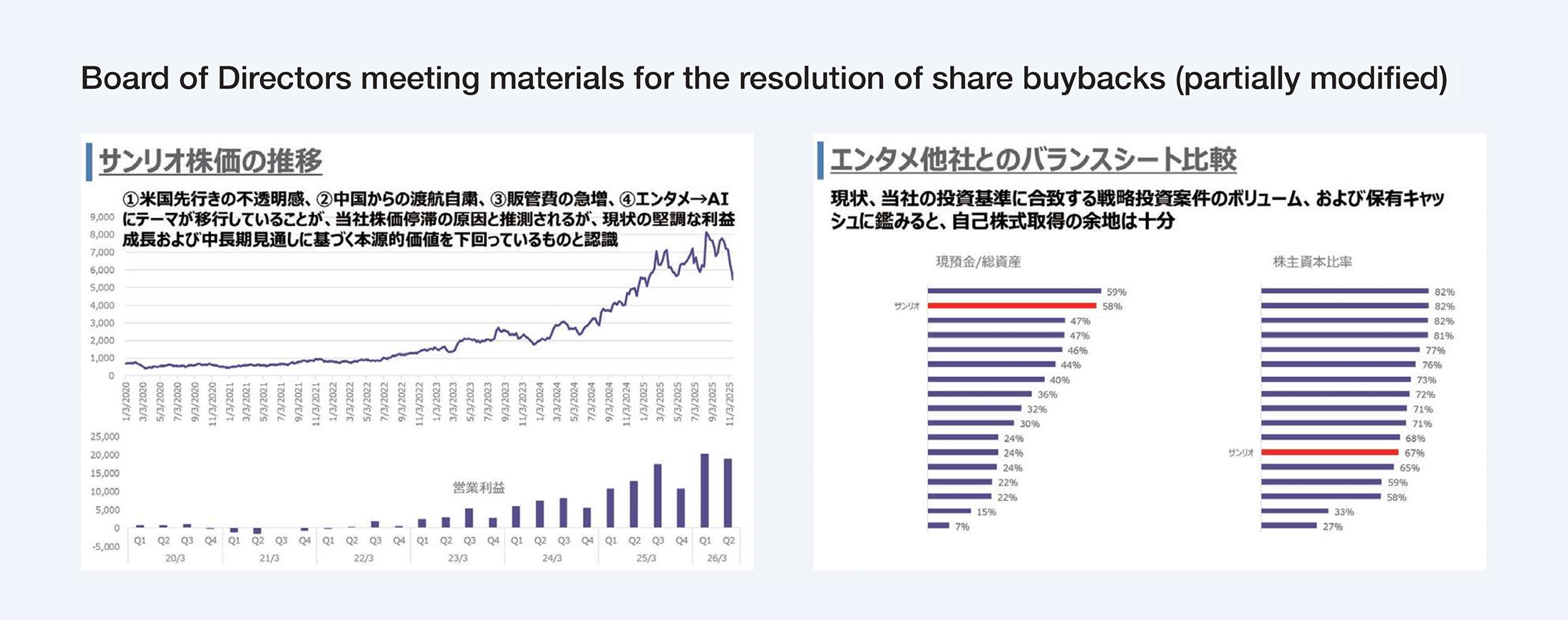
In November 2025, we announced opportunistic share buybacks of about 15 billion yen outside of the financial results announcement period. This is because we determined that our share price was undervalued relative to the intrinsic value we believe our company possesses, and that doing so would not impair our capacity for future growth investments.
I do not view shareholder returns as merely a way to dispose of surplus funds. I believe it is also an important message that shows what kind of value creation we aim for as management, and how we prioritize capital allocation while being conscious of cost of capital and market valuations.
Going forward, we will continue to fulfill our duty of accountability with regards to balance between investment and returns from the perspectives of both financial discipline and our growth strategy.
Strengthening governance and global CFO functions
Enhancing our governance and business management is an essential theme for our company in the sustainable expansion of corporate value.
In June 2025, we transitioned to a company with an Audit and Supervisory Committee, and the Board of Directors deepened discussions on issues directly related to corporate value, such as our Long-Term Vision, business portfolio, M&A strategy, organizational structure, share price and investor feedback, and strategies and reviews for each region and function, based on the key agenda items set in advance.
Additionally, in terms of business management, we are working to advance organizing of key issues by the Investment Committee, strengthen global FP&A functions, and conduct continuous research on the business performance and trends of competitors.
Given the misconduct incident that recently came to light, we will strengthen the global business management of the Head Office even further.
Specifically, we will increase the frequency of communication between the CFO at the Head Office and the financial officers of our overseas subsidiaries to promote the dissemination of our global financial policy, and to establish a system that allows us to gain insight into the performance progress and key issues for each country in a timely manner.
Dialogue with shareholders and investors
As we take steps to clearly define our policy of prioritizing long-term performance over short-term performance, we also anticipate changes to the investor base with whom we must conduct ongoing dialogue. We prioritize dialogue with investors who align with our strategy of maximizing long-term corporate value, rather than focusing on short-term performance fluctuations.
In FY3/2026, we conducted 739 meetings (a total of 3,329 companies), primarily with overseas investors. While the proportion of overseas investors in our shareholder composition fell from 31.3% at the end of FY3/2025 to 22.5% in FY3/2026, due to factors such as declining interest in the entertainment sector as a whole, concerns over impact from the United States'tariff policy and Japan-China relations on our business performance, we have been able to maintain continuous dialogue with long-term oriented investors, particularly with our President and CEO and myself.
Going forward, we will continue to communicate our efforts to achieve our Long-Term Vision in a clear and thoughtful manner, broadening understanding and building greater support for our vision.
As the officer in charge of finance, I will contribute to the enhancement of Sanrio's corporate value not only by upholding financial discipline, but also by supporting management challenges, increasing the quality of capital allocation, and deepening dialogue with the market.
Intangible assets such as IP and brand value, while difficult to see from an accounting perspective, are the very source of future cash flows. I believe that accurately communicating such intangible value in financial terms and building trust with stakeholders, including shareholders and investors, are important roles of the officer in charge of finance.
Updated on: August 2026